
VEGETIX RANGE
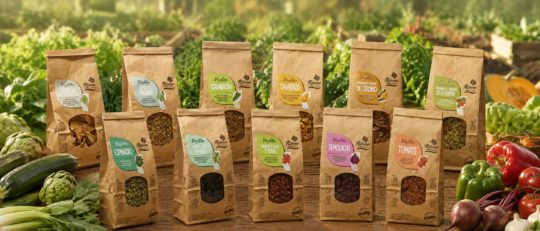
VEGETIX: dehydrated vegetables for rabbits and rodents
VEGETIX: dehydrated vegetables for rabbits and rodents
Discover VEGETIX by Ribero, our range of dehydrated vegetables for rabbits and other small rodents, carefully selected to add new aromas, flavours and textures to their diet.
A natural and simple way to complement their diet, enrich mealtimes and encourage their natural foraging behaviour.
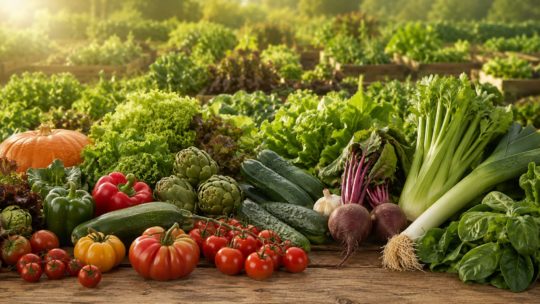
The VEGETIX range includes a variety of carefully selected and dehydrated vegetables such as cucumber, artichoke, spinach, zucchini, pumpkin, tomato, beetroot and pepper, as well as delicious vegetable mixes.
They can be offered on their own, combined with hay and suitable plants, or used in foraging trays and enrichment activities.
Because a varied diet can also become an experience to explore, smell, search and enjoy.
Why choose Ribero VEGETIX vegetables?
Vegetables are an excellent way to add a variety of aromas, textures and nutrients to a diet adapted to the needs of each species.
At Ribero, we carefully select every ingredient in the VEGETIX range to provide different options for complementing the diet of rabbits and other small rodents.
- 100% selected vegetables: recognisable ingredients, carefully selected.
- No added sugars: the flavour comes naturally from each vegetable.
- Variety of flavours and textures: different vegetables and formats help prevent a monotonous diet.
- Ideal for enrichment: hide them among hay, use them in foraging trays or scatter them around their enclosure to encourage natural food-searching behaviour.
- Ribero selection and control: we apply our agricultural expertise and product control to offer carefully selected and packed ingredients.
Vegetables for rabbits and rodents: a natural way to add variety
Vegetables can be part of a varied diet adapted to the nutritional needs of each species. In dehydrated form, they provide different aromas, flavours and textures in a practical and convenient way.
VEGETIX vegetables can be offered as a complementary food, combined with suitable plants, leaves and other natural foods appropriate for each animal.
They are also ideal for creating foraging and environmental enrichment activities, stimulating curiosity, sense of smell and natural food-searching behaviour.
Each vegetable has its own nutritional characteristics, so we recommend offering variety and adapting the amount to the species, age and individual needs of each animal.
Spinach
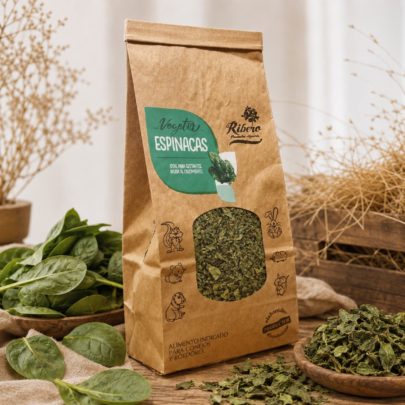
What does spinach provide for rabbits, guinea pigs, chinchillas and other rodents?
VEGETIX dehydrated spinach by Ribero is a complementary food that can add variety to the diet of rabbits, guinea pigs, chinchillas and other small rodents.
From a nutritional point of view, spinach naturally provides iron, calcium, protein, fibre, vitamins and minerals. Iron contributes to normal red blood cell formation and oxygen transport, while calcium is involved in maintaining bones and teeth.
Because this is a dehydrated food, its nutrients are more concentrated than in fresh spinach, so it should be offered in small amounts.
Nutritional benefits of spinach
- Natural source of iron and calcium: spinach naturally provides minerals such as iron and calcium, which are involved in essential body functions.
- Useful during growth stages: growing rabbits, guinea pigs, chinchillas and other small rodents have specific nutritional requirements. Spinach can form part of a varied diet as an additional source of nutrients.
- An option to consider during pregnancy: pregnant or nursing females have increased nutritional requirements. Spinach can form part of a varied diet because of its mineral content, although we recommend adjusting the diet with advice from an exotic-animal veterinarian during these stages.
- Adds variety to the diet: alternating different vegetables, leaves, plants and flowers introduces new aromas, flavours and textures and helps prevent dietary monotony.
Can rabbits eat spinach?
Yes. Rabbits can eat spinach as a complementary food and in moderate amounts.
Spinach should not become the basis of a rabbit’s diet. In adult rabbits, good-quality hay should always be available without restriction, together with fresh water and a diet adapted to their nutritional needs.
Can guinea pigs eat spinach?
Yes. Spinach can also be included as part of a guinea pig’s complementary diet.
Guinea pigs require an adequate daily supply of vitamin C, as they cannot produce it themselves.
Spinach can add variety, but it should not replace a diet specifically designed to meet the nutritional requirements of guinea pigs.
Can chinchillas eat spinach?
More caution is recommended when offering vegetables and dehydrated foods to chinchillas.
Their diet needs to be particularly high in fibre and adapted to their sensitive digestive system. Dehydrated spinach may be offered, when suitable for the individual animal, occasionally and in very small amounts, without replacing hay or the main diet.
What about other small rodents?
Nutritional requirements vary considerably between species.
Hamsters, degus and other small rodents do not have the same nutritional needs as rabbits, guinea pigs or chinchillas.
Any complementary food should therefore be offered according to the animal’s species, age, size and usual diet.
Does spinach contain calcium?
Yes. Spinach naturally contains calcium.
Because the product is dehydrated, we recommend offering it in moderation and alternating it with other suitable foods.
For animals that need their calcium intake to be carefully controlled, consult a veterinarian experienced in exotic pets.
**IMPORTANT**
VEGETIX Spinach is a complementary food. It does not replace a complete and balanced diet or veterinary care.
The amount and frequency should always be adapted to the species, age, body condition and individual needs of each animal.
You can mix a small amount of dehydrated spinach with other suitable leaves and hide it among the hay. This introduces a different aroma and texture while turning mealtime into a simple foraging activity.
Celery and Leek
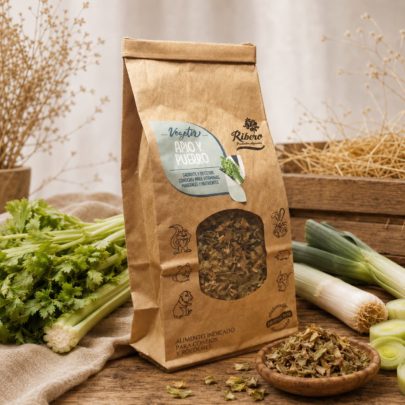
Can rabbits, guinea pigs and chinchillas eat celery and leek?
VEGETIX Celery and Leek is NOT a necessary or recommended food in the regular diet of rabbits, guinea pigs or chinchillas.
Leek belongs to the Allium genus, the same botanical group that includes onions, garlic and chives.
Veterinary literature documents toxicosis associated with the consumption of Allium species in different animals. Certain sulphur-containing compounds may cause oxidative damage to red blood cells.
For this reason, WE DO NOT RECOMMEND deliberately or regularly feeding leek to rabbits, guinea pigs or chinchillas.
If one of these animals accidentally eats a very small amount on a single occasion, this does not necessarily mean that poisoning will occur. However, in the event of a large or repeated ingestion, or if any symptoms develop, we recommend contacting an exotic-animal veterinarian.
This product is marketed mainly as a complementary food for rats, hamsters, mice, gerbils and other small rodents whose diets can include a wider variety of ingredients, always adapting the amount to the requirements of each species.
Nutritional benefits of celery and leek
- Natural source of fibre: with 15.38% fibre, this vegetable combination contributes to fibre intake within a varied diet.
- Vitamins and minerals: celery and leek naturally contain vitamins and minerals involved in many normal body processes.
- Low in fat: the product contains only 0.59% fat, making it a low-fat vegetable complement within diets where protein, fat and energy are also supplied by other foods appropriate for the species.
- Variety of aromas and textures: their strong aroma and dehydrated texture introduce different sensory stimuli into the usual diet.
- Food enrichment: they can be used in foraging and food-searching activities to encourage smell, exploration and natural feeding behaviour.
What do celery and leek provide for rats, hamsters and other rodents?
Celery is a particularly aromatic vegetable that provides fibre, together with B-group vitamins, vitamin K and various minerals.
Leek naturally provides fibre, vitamin B9, vitamin C, calcium and other micronutrients.
Together they can introduce a different vegetable complement into the diet of small rodents, especially species with a more varied or omnivorous diet.
Can rats eat celery?
Yes. Celery can form part of a varied diet for rats when offered in moderate quantities.
Rats are omnivores and need a balanced combination of nutrients. Vegetables can be included alongside their usual food to add variety.
VEGETIX dehydrated celery may also be mixed with other suitable foods or used in enrichment and food-searching activities.
Can hamsters eat celery?
Celery can also be used as a complementary ingredient within a diet adapted for hamsters.
Hamsters need a varied diet that provides protein, fat, carbohydrates, fibre, vitamins and minerals in suitable proportions.
Dehydrated vegetables can be offered in small amounts to introduce new flavours and textures without replacing the main food.
Can mice and gerbils eat celery?
Mice and gerbils have different nutritional requirements from herbivores such as rabbits or guinea pigs.
Within a properly formulated diet, small amounts of suitable vegetables can be used to add variety and enrichment.
The amount and frequency should always be adjusted according to species, size, age and usual diet.
Do celery and leek contain vitamins and minerals?
Yes. Both vegetables naturally contain different vitamins and minerals.
Celery provides B-group vitamins and vitamin K, while leek contains, among other nutrients, vitamin B9, vitamin C and calcium.
They can therefore form part of a varied diet where appropriate, but no single food should be considered a complete source of all the nutrients an animal requires.
Zucchini
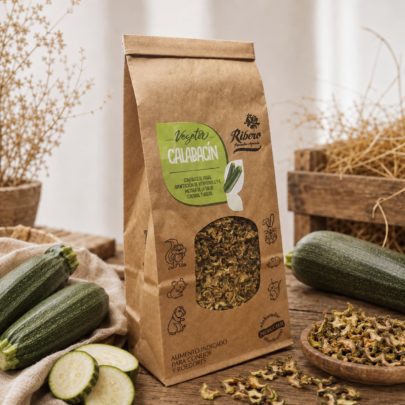
What does zucchini provide for rabbits, guinea pigs, chinchillas and other rodents?
Zucchini naturally contains vitamins, minerals, fibre and plant compounds that can add variety to a balanced diet.
Its naturally occurring nutrients include vitamin A, vitamin C, calcium, phosphorus, lutein and zeaxanthin, as well as fibre and plant compounds such as mucilage.
It can therefore be an interesting complementary food for introducing new flavours, aromas and textures.
Nutritional benefits of zucchini
- Vitamins and minerals: zucchini naturally contains vitamins A and C and minerals such as calcium and phosphorus.
- Fibre: its fibre content helps add plant variety to the diet, although in herbivorous species it never replaces the long structural fibre provided by hay.
- Natural plant compounds: zucchini contains lutein and zeaxanthin, carotenoids naturally found in a variety of vegetables.
- Texture and variety: the dehydrated format provides a different texture that can be particularly useful in foraging and enrichment activities.
Can rabbits eat zucchini?
Yes. Rabbits can eat zucchini as part of a varied diet.
It should be used as a complementary food, in small amounts and without reducing hay intake.
For adult rabbits, good-quality hay should always be available without restriction, together with clean, fresh water.
Can guinea pigs eat zucchini?
Yes. Zucchini can be included in the diet of guinea pigs.
It can provide variety in flavour and texture but should not replace a diet adapted to their specific nutritional requirements.
Guinea pigs require an adequate daily intake of vitamin C, as they cannot synthesise it themselves.
Can chinchillas eat zucchini?
More caution is advisable when offering vegetables, particularly dehydrated vegetables, to chinchillas.
Their diet should be very high in fibre and adapted to a sensitive digestive system. Dehydrated zucchini may therefore be offered, when appropriate for the individual animal, occasionally and in small amounts, without replacing hay.
What about other small rodents?
Hamsters, rats, mice, gerbils and other small rodents may have very different nutritional requirements.
Zucchini can be offered in small quantities within a varied diet, taking into account species, age, activity level and the composition of the animal’s usual diet.
Does zucchini support normal digestion?
Zucchini provides fibre and naturally contains mucilage.
These components can be included as part of a varied diet that supports normal digestive function, but zucchini should not be presented as a treatment for digestive problems or be given therapeutic properties on its own.
In herbivorous species, the most important dietary factor for digestive health remains a diet rich in structural fibre, mainly provided by hay.
Does zucchini provide nutrients for the coat?
Zucchini contains vitamins and naturally occurring antioxidant plant compounds.
Within a balanced diet, these nutrients contribute to many normal body functions, including the normal formation and maintenance of tissues.
However, coat quality depends on the overall diet, health status and many other factors. No single food should therefore be considered responsible for improving coat condition on its own.
Does zucchini contain lutein and zeaxanthin?
Yes. Lutein and zeaxanthin are carotenoids naturally found in various vegetables, including zucchini.
They form part of a varied plant-based diet and are known for their antioxidant activity.
**IMPORTANT**
VEGETIX Zucchini is a complementary food and does not replace a complete and balanced diet.
For rabbits, guinea pigs and other herbivores, good-quality hay should always be available without restriction, together with clean, fresh water.
The amount and frequency should always be adapted to the species, age, weight, activity level and individual requirements of each animal.
You can hide small pieces of dehydrated zucchini among the hay or inside a foraging tray. Its different aroma and texture can encourage animals to search, sniff and explore, turning feeding into an enrichment activity.
Pumpkin
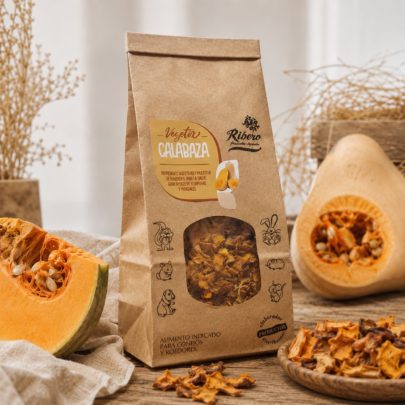
What does pumpkin provide for rabbits, guinea pigs, chinchillas and other rodents?
Pumpkin naturally contains vitamins, minerals, fibre and antioxidant plant compounds.
Its naturally occurring nutrients include vitamins A, C and E, B-group vitamins such as B2 and B6, folate and minerals including potassium, phosphorus, magnesium, iron and zinc.
It can therefore be an interesting way to introduce additional variety in nutrients, aromas and textures within a balanced diet.
Nutritional benefits of pumpkin
- Vitamins: pumpkin naturally contains vitamins A, C and E as well as several B-group vitamins.
- Minerals: it provides potassium, phosphorus, magnesium, iron and zinc, which are involved in many normal body functions.
- Fibre: dehydrated pumpkin provides fibre and can form part of a varied diet. In herbivorous species, however, it never replaces the long structural fibre supplied by hay.
- Natural antioxidant compounds: pumpkin naturally contains carotenoids and other antioxidant plant compounds.
- Variety of flavours and textures: its slightly sweet flavour and dehydrated texture introduce different sensory experiences into the usual diet.
Can rabbits eat pumpkin?
Yes. Rabbits can eat pumpkin as a complementary food.
It should be offered in small amounts as part of a balanced diet and should not reduce hay intake.
For adult rabbits, good-quality hay should always be available without restriction, along with clean, fresh water.
Dehydrated pumpkin has a more concentrated flavour than fresh pumpkin, so large portions are unnecessary.
Can guinea pigs eat pumpkin?
Yes. Pumpkin can form part of a varied guinea pig diet.
It can be used as a complementary ingredient to add new flavours and textures but should be offered in moderate quantities.
Guinea pigs need an adequate daily intake of vitamin C, because their bodies cannot produce it.
Pumpkin may naturally contribute some vitamin C, but it should not be considered the only source of this vitamin in their diet.
Can chinchillas eat pumpkin?
For chinchillas, we recommend offering pumpkin more occasionally and in very small quantities.
Their digestive system is adapted to a diet that is high in fibre and relatively low in sugars and fats.
Pumpkin, especially in dehydrated form, should therefore remain an occasional complement and should never replace hay or the main diet.
What about other small rodents?
Hamsters, rats, mice, gerbils and other small rodents have different nutritional requirements from rabbits, guinea pigs and chinchillas.
Pumpkin can be included in small quantities within a varied diet, taking into account the animal’s species, age, activity level and usual food.
For omnivorous species, it can be combined with other suitable foods to create a more varied diet.
Is pumpkin good for digestion?
Pumpkin naturally contains fibre.
Fibre forms part of a balanced diet and contributes to normal digestive function.
However, pumpkin should not be presented as a treatment for digestive problems. In rabbits, guinea pigs and other herbivores, normal digestive function depends primarily on a diet rich in hay and structural fibre.
Does pumpkin contain vitamin A?
Yes. Pumpkin is known for its natural content of carotenoids, some of which can act as precursors to vitamin A.
These compounds form part of a varied plant-based diet and contribute to various normal body functions.
Does pumpkin contain antioxidants?
Yes. Pumpkin naturally contains carotenoids and antioxidant vitamins such as vitamins C and E.
These nutrients contribute to normal cellular protection mechanisms but should always be considered within the context of a complete and balanced diet.
**IMPORTANT**
VEGETIX Pumpkin is a complementary food and does not replace a complete and balanced diet.
For rabbits, guinea pigs and other herbivores, good-quality hay should always be available without restriction, together with clean, fresh water.
The amount and frequency should be adapted to the species, age, weight, activity level and individual needs of each animal.
For animals with health conditions, pregnant or nursing females, or animals receiving treatment, consult an exotic-animal veterinarian before making dietary changes.
You can break dehydrated pumpkin into small pieces and hide them among hay, dried leaves or inside a foraging tray. Its distinctive aroma may encourage the animal to sniff, search and explore, turning a small food complement into an enrichment activity.
Artichoke Chips
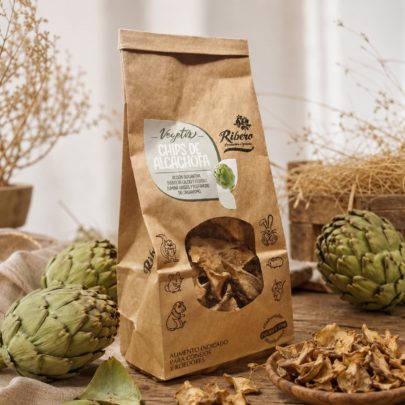
What does artichoke provide for rabbits, guinea pigs, chinchillas and other rodents?
Artichoke naturally contains vitamins, minerals, fibre and plant compounds.
Its naturally occurring nutrients include B-group vitamins, particularly vitamin B1, together with smaller amounts of vitamins C, B3, B5 and B6.
It also provides minerals such as potassium, phosphorus, iron, magnesium and zinc, which are involved in many normal body functions.
Dehydrated artichoke can therefore be used to introduce variety into a balanced diet without replacing the staple foods required by each species.
Nutritional benefits of artichoke
- Vitamins and minerals: artichoke contains B-group vitamins and minerals such as potassium, phosphorus, magnesium, iron and zinc.
- Fibre: its fibre content adds plant variety to the diet. In herbivorous animals, this complementary fibre never replaces the structural fibre supplied by hay.
- Natural plant compounds: artichoke contains naturally occurring bioactive plant compounds. These are best considered as part of a varied diet rather than being given therapeutic properties on their own.
- Very low in fat: with only 0.16% fat, VEGETIX Artichoke Chips have a very low fat content.
- Different texture and flavour: their crunchy format can introduce new sensory experiences into the usual diet.
Can rabbits eat artichoke?
Yes. Artichoke can be used as a complementary food for rabbits, in small amounts.
For adult rabbits, the basis of the diet should remain good-quality hay available without restriction, accompanied by clean, fresh water and an appropriately balanced diet.
VEGETIX Artichoke Chips can provide variety, but they should not become a staple food or replace hay.
Can guinea pigs eat artichoke?
Yes. Artichoke can form part of a varied guinea pig diet.
It should be offered in moderate quantities alongside a diet specifically adapted to the nutritional needs of guinea pigs.
These animals require an adequate daily supply of vitamin C, as they cannot synthesise it themselves.
Artichoke may naturally provide small amounts of vitamin C, but it should not be used as the main source for meeting this requirement.
Can chinchillas eat artichoke?
For chinchillas, dehydrated vegetables should generally be offered occasionally and in small quantities.
Their digestive system is adapted to a very high-fibre diet, so hay should remain one of the main components of their food intake.
Artichoke chips can be used as an occasional complement or as part of enrichment activities, provided the quantity is small and does not replace staple foods.
What about other small rodents?
Hámsteres, ratas, ratones, jerbos y otros pequeños roedores tienen necesidades nutricionales diferentes entre sí.
La alcachofa deshidratada puede utilizarse en pequeñas cantidades dentro de una dieta variada, teniendo siempre en cuenta la especie, edad, peso, actividad y composición de su alimentación habitual.
En especies omnívoras puede combinarse con otros ingredientes adecuados para conseguir una dieta más diversa.
Is artichoke good for digestion?
Artichoke naturally provides fibre and various plant compounds.
It can form part of a varied diet that supports normal digestive function, but it should not be presented as a treatment for intestinal problems.
In rabbits, guinea pigs and other herbivores, normal digestive function depends primarily on a diet rich in structural fibre and a continuous supply of good-quality hay.
Does artichoke have cleansing or detoxifying properties?
Artichoke is traditionally associated with certain naturally occurring plant compounds.
However, in animal nutrition, it is better not to claim that artichoke directly “removes toxins”, “cleanses the liver” or “reduces cholesterol”.
It is more accurate to highlight its natural contribution of fibre, vitamins, minerals and plant compounds within a balanced diet.
Is artichoke good for the liver of rabbits and rodents?
Artichoke contains plant compounds that have been studied in nutrition, but no single food should be regarded as a treatment for liver problems.
If a rabbit, guinea pig, chinchilla or other small rodent has liver disease or any other health condition, its diet should be assessed by a veterinarian experienced in exotic pets.
**IMPORTANT**
VEGETIX Artichoke Chips are a complementary food. They do not replace a complete and balanced diet.
For rabbits, guinea pigs and other herbivores, good-quality hay should always be available without restriction, together with clean, fresh water.
The amount and frequency should be adapted to the species, age, weight, activity level and individual needs of each animal.
For animals with health conditions, pregnant or nursing females, or animals receiving treatment, seek veterinary advice before making dietary changes.
You can break an artichoke chip into several small pieces and hide them among hay or inside a foraging tray. This helps stimulate the sense of smell, exploration and natural food-searching behaviour.
Parsnip
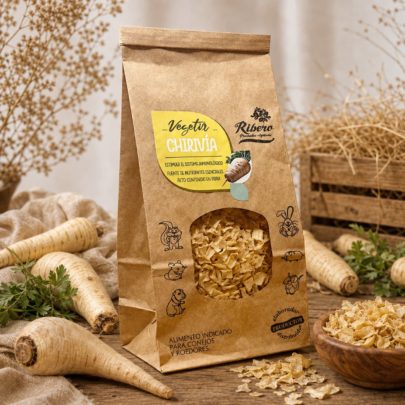
What does parsnip provide for rabbits, guinea pigs, chinchillas and other rodents?
Parsnip naturally contains fibre, vitamins, minerals and plant compounds.
Its naturally occurring nutrients include vitamin C, B-group vitamins, potassium, calcium and magnesium. It also provides fibre, helping to increase plant variety within the diet.
Because of its nutritional profile and flavour, it can be used as a complementary food within a balanced diet, always respecting the specific needs of each species.
Nutritional benefits of parsnip
- Fibre: parsnip naturally contains fibre. It can complement the diet and provide a different vegetable texture, although in rabbits, guinea pigs and other herbivores it never replaces the long fibre supplied by hay.
- Vitamins and minerals: parsnip naturally provides vitamin C, B-group vitamins, potassium, calcium and magnesium.
- Dietary variety: its distinctive aroma and flavour allow it to be alternated with other suitable vegetables, leaves, herbs and flowers.
- Food enrichment: its dehydrated texture allows small pieces to be used in foraging and food-searching activities.
Can rabbits eat parsnip?
Yes. Rabbits can eat parsnip as a complementary food and in small quantities.
Parsnip is a root vegetable with a naturally sweeter taste than many leafy vegetables. It is therefore unnecessary to offer large amounts or to use it every day.
For adult rabbits, good-quality hay should be available without restriction, accompanied by fresh water and a balanced diet.
Dehydrated parsnip can be used to add variety or as a small food complement during enrichment activities.
Can guinea pigs eat parsnip?
Yes. Parsnip can occasionally be included in a guinea pig’s diet.
It adds variety in taste and texture and naturally contains vitamin C. However, this does not mean that it should be used as the main source of vitamin C.
Guinea pigs require an adequate daily supply of this vitamin, so their diet must be formulated to meet this specific nutritional requirement.
Can chinchillas eat parsnip?
Greater moderation is recommended for chinchillas.
Their diet should be particularly high in fibre and carefully controlled in foods that are more concentrated in sugars or starches.
Because parsnip is a dehydrated root vegetable, it should be offered in very small quantities and only occasionally.
Hay should remain one of the essential components of their diet.
What about other small rodents?
Rats, hamsters, mice, gerbils and other small rodents have nutritional requirements that differ from herbivorous species.
Parsnip can be used as a small complement within a varied diet, adjusting the amount according to species, age, weight, activity and usual diet.
For these species it may also be used as a small treat or as part of enrichment activities.
Does parsnip contain fibre?
Yes. Parsnip naturally provides fibre.
This fibre can complement the diet, but in herbivorous species it should not be confused with the long structural fibre provided by hay.
Does parsnip contain vitamin C?
Yes. Parsnip naturally contains vitamin C.
This can contribute to a varied diet where different plant sources of micronutrients are included.
However, particularly for guinea pigs, parsnip should not be used as the sole source of vitamin C.
Is parsnip good for digestion?
Parsnip contains fibre, including insoluble fibre, which can form part of a varied diet.
It can contribute to total dietary fibre intake, but it is better not to claim that parsnip “prevents constipation” or maintains healthy digestion by itself.
For rabbits, guinea pigs and other herbivores, the key dietary factor for normal digestive function remains the continuous intake of good-quality hay and structural fibre.
**IMPORTANT**
VEGETIX Parsnip is a complementary food. It does not replace a complete and balanced diet.
For rabbits, guinea pigs and other herbivores, good-quality hay should always be available without restriction, together with clean, fresh water.
As parsnip is a dehydrated root vegetable, we particularly recommend controlling the amount and offering it in moderation, adapting the frequency to the species, age, weight, activity level and individual needs of each animal.
Parsnip has a distinctive aroma and flavour. Instead of placing several pieces directly in the bowl, you can break one into smaller portions and hide them among the hay. This makes it easier to control the amount while encouraging the animal to sniff, search and explore.
.
Cucumber Chips
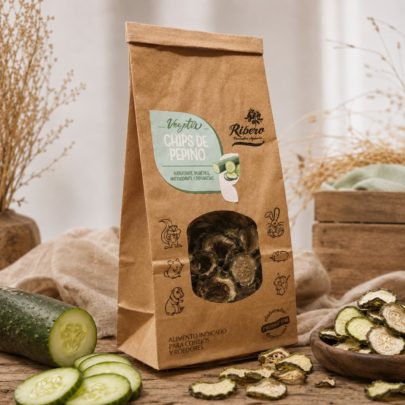
What does cucumber provide for rabbits, guinea pigs, chinchillas and other rodents?
Cucumber naturally provides protein, fibre, minerals and plant compounds.
VEGETIX Cucumber Chips contain protein, fibre, calcium and iron and have a low fat content.
They can be used to introduce variety into the diet but should never replace the staple foods required by each species.
Nutritional benefits of cucumber chips
- Fibre: dehydrated cucumber contains fibre, contributing to greater plant variety in the diet. In rabbits, guinea pigs and other herbivores, this complementary fibre does not replace the long fibre provided by hay.
- Plant protein: VEGETIX Cucumber Chips contain 18.17% protein, providing an interesting amount of plant protein for a complementary food.
- Minerals: they naturally contain minerals such as calcium and iron.
- Low in fat: with 0.98% fat, they are a low-fat vegetable complement.
- Variety and enrichment: their crunchy texture and aroma can introduce new stimuli and make them useful in food-searching activities.
Can rabbits eat cucumber?
Yes. Rabbits can eat cucumber as part of a varied diet.
In dehydrated form, it should be offered in small quantities, as removing water makes the food more concentrated than fresh cucumber.
VEGETIX dehydrated cucumber can be used as a complement or in enrichment activities, but it should never replace good-quality hay available without restriction.
Can guinea pigs eat cucumber?
Yes. Cucumber can form part of a guinea pig’s complementary diet.
It can introduce variety in flavour and texture.
Guinea pigs need an adequate daily supply of vitamin C, because they cannot produce it themselves. Cucumber should not be relied on as the main source of this vitamin.
Can chinchillas eat cucumber?
Greater moderation is recommended when offering dehydrated vegetables to chinchillas.
Their digestive system is adapted to a particularly high-fibre and stable diet.
Cucumber chips should therefore be offered, when appropriate for the animal, occasionally and in small quantities.
Hay should remain one of the main components of their diet
What about other small rodents?
Hamsters, rats, mice, gerbils and other small rodents have different nutritional needs.
Cucumber chips can be used as a small complementary food in a varied diet adapted to each species.
For omnivorous species, they can be combined with other appropriate foods to provide different aromas, flavours and textures.
Is cucumber good for digestion?
Dehydrated cucumber naturally provides fibre.
This fibre can form part of a varied diet, but cucumber should not be presented as a treatment for digestive problems.
For rabbits, guinea pigs and other herbivores, normal digestive function depends particularly on a diet rich in structural fibre from hay.
Does cucumber have diuretic or cleansing properties?
Fresh cucumber is particularly known for its high water content.
In dehydrated cucumber chips, most of this water has been removed during dehydration. Dehydrated cucumber should therefore not be considered equivalent to fresh cucumber in terms of hydration.
Its main value as a complementary food lies in its contribution of fibre, plant protein, minerals and variety in texture and flavour.
Does cucumber contain antioxidants?
Yes. Cucumber naturally contains various plant compounds with antioxidant activity.
These compounds form part of a varied plant-based diet and contribute to normal cellular protection mechanisms.
Does cucumber make rabbits and rodents gain weight?
VEGETIX Cucumber Chips contain only 0.98% fat, so their fat content is low.
Even so, the amount should be controlled because dehydrated foods are more concentrated than fresh foods.
Maintaining an appropriate body weight depends on the overall diet, species and activity level.
**IMPORTANT**
VEGETIX Cucumber Chips are a complementary food and do not replace a complete and balanced diet.
For rabbits, guinea pigs and other herbivores, good-quality hay should always be available without restriction, together with clean, fresh water.
The amount and frequency should be adapted to the species, age, weight, activity level and individual requirements of each animal.
For animals with health conditions, pregnant or nursing females, or animals receiving treatment, consult an exotic-animal veterinarian.
You can break a cucumber chip into several small pieces and hide them among hay or in a foraging tray. This turns a small amount of food into an activity that encourages smelling, exploring, and natural food searching.
Red and Green Pepper
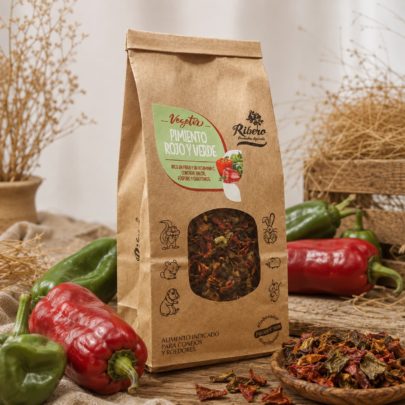
What does pepper provide for rabbits, guinea pigs, chinchillas and other rodents?
Pepper naturally provides fibre, vitamins, minerals and carotenoids.
Red pepper is particularly known for its natural content of vitamin C, vitamin A and carotenoids, together with minerals such as potassium and phosphorus.
Green pepper also provides vitamin C, vitamin B6 and vitamin E, as well as different antioxidant plant compounds.
It can therefore be an interesting way to introduce additional nutritional variety, colour, aroma and texture into a balanced diet.
Nutritional benefits of red and green pepper
- Vitamin C: peppers are well known for their naturally occurring vitamin C, a particularly important nutrient for species such as guinea pigs.
- Carotenoids and vitamin A: red pepper contains carotenoids and vitamin A precursors naturally present in brightly coloured vegetables.
- Fibre: its fibre content adds plant variety to the diet. In herbivorous species, this complementary fibre never replaces the long fibre supplied by hay.
- Vitamins and minerals: peppers naturally provide vitamin B6, vitamin E, calcium, potassium and phosphorus.
- Variety and enrichment: their aroma, colour and texture can provide different stimuli and make them useful in food-searching activities.
Can rabbits eat peppers?
Yes. Rabbits can eat peppers as part of a varied diet.
They should be offered as a complementary food, in small quantities and without reducing hay consumption.
For adult rabbits, good-quality hay should always be available without restriction, accompanied by clean, fresh water.
Dehydrated pepper can add variety and also be used as a small reward within foraging activities.
Can guinea pigs eat peppers?
Yes. Pepper can be particularly interesting in the diet of guinea pigs because of its natural vitamin C content.
Guinea pigs cannot synthesise vitamin C themselves, so they need to obtain it from their diet every day.
Red and green pepper can contribute to dietary variety, but dehydrated pepper should be offered in small amounts and should not be considered the only source of vitamin C.
Can chinchillas eat peppers?
For chinchillas, greater moderation is recommended.
Their diet should be particularly high in fibre and adapted to a sensitive digestive system. Dehydrated vegetables should be offered occasionally and in small amounts, without reducing hay intake.
What about other small rodents?
Hamsters, rats, mice, gerbils and other small rodents have different nutritional requirements.
Red and green pepper can be offered in small amounts as part of a varied diet, taking into account species, age, size, activity and usual food intake.
For omnivorous species, it can be combined with other suitable foods to increase dietary variety.
Do peppers contain vitamin C?
Yes. Pepper is one of the vegetables particularly known for its natural vitamin C content.
This is especially relevant for guinea pigs, which require a daily dietary supply of this vitamin.
The actual amount consumed will depend on portion size, processing and the rest of the diet, so one single food should not be relied on as the sole source.
Are red and green peppers nutritionally the same?
Not exactly.
Red pepper generally contains higher levels of carotenoids and compounds associated with ripening, while green pepper also provides vitamins and minerals but with a slightly different profile.
Combining the two can provide a greater variety of plant compounds, aromas and flavours.
Are peppers good for digestion?
Peppers naturally contain fibre.
This fibre can contribute to total dietary fibre intake, but peppers should not be presented as a digestive treatment.
For rabbits, guinea pigs and other herbivores, the most important factor for normal digestive function remains a diet rich in structural fibre from hay.
Do peppers contain antioxidants?
Yes. Peppers naturally contain vitamin C, carotenoids and other plant compounds with antioxidant activity.
These nutrients contribute to normal cellular protection mechanisms.
**IMPORTANT**
VEGETIX Red and Green Pepper is a complementary food and does not replace a complete and balanced diet.
For rabbits, guinea pigs and other herbivores, good-quality hay should always be available without restriction, together with clean, fresh water.
The amount and frequency should be adapted to the species, age, weight, activity level and individual needs of each animal.
For animals with health conditions, pregnant or nursing females, or animals receiving treatment, consult an exotic-animal veterinarian.
You can break red and green pepper into small pieces and hide them among hay or inside a foraging tray. Their distinctive aroma and colour can encourage curiosity and turn feeding into an exploration and food-searching activity.
Beetroot
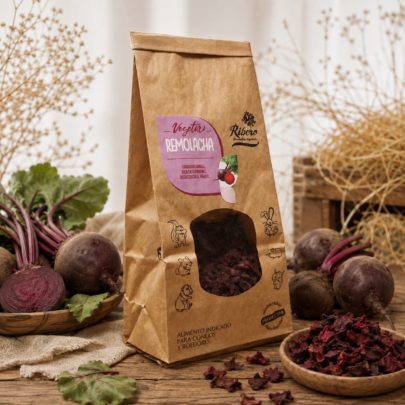
What does beetroot provide for rabbits, guinea pigs, chinchillas and other rodents?
Beetroot naturally contains protein, fibre, vitamins, minerals and plant pigments.
Its naturally occurring nutrients include vitamin C, B-group vitamins, potassium, iron and other minerals, together with compounds such as betalains, which give beetroot its characteristic red colour.
It can be used to add variety to a balanced diet while respecting the individual requirements of each species.
Nutritional benefits of beetroot
- Vitamins and minerals: beetroot naturally contains vitamin C, B-group vitamins, potassium, iron and other micronutrients.
- Fibre: its fibre content helps add plant variety to the diet. For rabbits, guinea pigs and other herbivores, this complementary fibre never replaces the structural fibre provided by hay.
- Natural plant pigments and compounds: beetroot contains betalains and other plant compounds with antioxidant activity.
- Very low in fat: with only 0.07% fat, VEGETIX Beetroot has a very low fat content.
- Variety of aroma, flavour and texture: its intense colour, aroma and distinctive taste introduce different sensory experiences into the usual diet.
Can rabbits eat beetroot?
Yes. Rabbits can eat beetroot as a complementary food and in small quantities.
Beetroot is a root vegetable with a naturally sweeter flavour than many leafy vegetables. For this reason, we do not recommend offering large amounts or making it part of the daily staple diet.
For adult rabbits, good-quality hay should always be available without restriction, together with clean, fresh water.
Dehydrated beetroot may be used occasionally to add variety or as part of enrichment activities.
Can guinea pigs eat beetroot?
Yes. Beetroot can form part of a varied guinea pig diet.
It can provide different flavours and textures but should be offered in moderation.
Guinea pigs require an adequate daily intake of vitamin C. Beetroot naturally contains some vitamin C, but it should not be considered the sole source for meeting their needs.
Can chinchillas eat beetroot?
Greater caution is recommended for chinchillas.
Their diet needs to be very high in fibre and relatively low in more concentrated sources of sugars.
As beetroot is a dehydrated root vegetable, it should be offered occasionally and in very small quantities.
Hay should remain one of the pillars of the diet.
What about other small rodents?
Rats, hamsters, mice, gerbils and other small rodents have different nutritional requirements.
Dehydrated beetroot can be included in small quantities in a varied diet, adjusting the amount to species, age, weight, activity and usual diet.
For omnivorous species, it may be combined with other appropriate foods to provide a greater diversity of flavours, textures and nutrients.
Does beetroot contain iron?
Yes. Beetroot naturally contains iron.
It also naturally contains vitamin C, which participates in iron absorption under certain nutritional conditions.
Does beetroot contain antioxidants?
Yes. Beetroot contains betalains and other plant compounds with antioxidant activity.
These compounds form part of a varied plant-based diet and contribute to normal protection against oxidative stress.
Is beetroot good for digestion?
Beetroot naturally provides fibre.
This fibre can complement the diet, but in herbivorous species digestive health mainly depends on an adequate intake of hay and long structural fibre.
Beetroot should therefore be regarded as a complementary food rather than as a product intended to treat digestive problems.
Does beetroot make rabbits and rodents gain weight?
VEGETIX Beetroot contains only 0.07% fat, but this does not mean it should be offered without limits.
As a naturally sweet-tasting dehydrated root vegetable, we recommend controlling the amount and using it as a small complement within a balanced diet.
Body weight depends on the overall diet, quantities offered, species and activity level.
**IMPORTANT**
VEGETIX Beetroot is a complementary food. It does not replace a complete and balanced diet.
For rabbits, guinea pigs and other herbivores, good-quality hay should always be available without restriction, together with clean, fresh water.
As this is a dehydrated root vegetable, we particularly recommend controlling portions and offering it in moderation.
The frequency should be adapted to the species, age, weight, activity level and individual requirements of each animal.
For animals with health conditions, pregnant or nursing females, or animals receiving treatment, consult an exotic-animal veterinarian.
Beetroot has a distinctive colour and aroma. You can break a small portion into several pieces and hide them among hay or inside a foraging tray, helping control the amount while encouraging the animal to sniff, explore and search.
Tomato
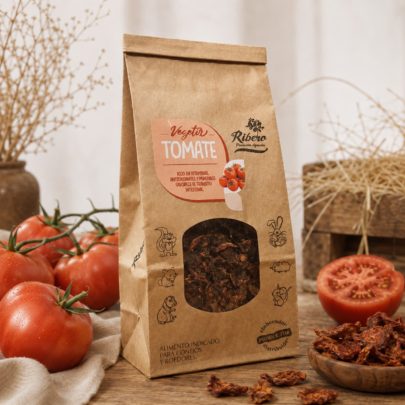
What does tomato provide for rabbits, guinea pigs, chinchillas and other rodents?
Tomato naturally contains fibre, vitamins, minerals and antioxidant compounds.
Its naturally occurring nutrients include vitamins C, E and A, together with vitamin K, potassium, iron and other micronutrients.
Tomato also contains lycopene, the characteristic plant pigment associated with its red colour and antioxidant activity.
It can therefore be an interesting way to introduce additional nutrient, flavour and texture variety into a balanced diet.
Nutritional benefits of tomato
- Vitamins: tomato naturally provides vitamins C, E, A and K.
- Fibre: VEGETIX dehydrated tomato contains 12.45% fibre, helping add plant variety to the diet.
- For rabbits, guinea pigs and other herbivores, this complementary fibre never replaces the long structural fibre provided by hay.
- Minerals: tomato contains potassium, iron and calcium.
- Natural antioxidant compounds: tomato contains carotenoids such as lycopene, together with vitamins that have antioxidant activity.
- Low in fat: with 0.77% fat, it is a low-fat vegetable complement.
Can rabbits eat tomato?
Yes. Rabbits can eat tomato as a complementary food and in moderate amounts.
Tomato should not replace hay or become a major part of the diet.
For adult rabbits, good-quality hay should always be available without restriction, along with clean, fresh water.
Dehydrated tomato has a more concentrated flavour than fresh tomato, so only a small amount is needed to add variety.
Can guinea pigs eat tomato?
Yes. Tomatoes can form part of a varied guinea pig diet.
It naturally provides vitamin C, although it should not be used as the sole source of this vitamin.
Guinea pigs need an adequate daily intake of vitamin C, because they cannot synthesise it themselves.
Tomatoes can therefore be offered as a complementary food, while the complete diet should still be formulated to meet their specific needs.
Can chinchillas eat tomato?
More moderation is recommended with vegetables and fruit for chinchillas, particularly in dehydrated form.
Their digestive system is adapted to a very high-fibre diet with limited concentrated foods.
Dehydrated tomato should therefore be offered occasionally and in very small quantities, without reducing hay intake.
What about other small rodents?
Rats, hamsters, mice, gerbils and other small rodents have different nutritional requirements.
Dehydrated tomato can be offered in small quantities within a varied diet, adjusting the amount and frequency according to species, age, weight, activity and usual diet.
Is tomato good for digestion?
Dehydrated tomato provides a useful amount of fibre.
This fibre can contribute to total dietary intake, but tomato should not be presented as a treatment for digestive problems.
For rabbits, guinea pigs and other herbivores, normal intestinal function depends mainly on a diet rich in hay and structural fibre.
Does tomato contain antioxidants?
Yes. Tomato naturally contains lycopene and other antioxidant plant compounds, together with several vitamins.
Fresh tomato also has a high water content. During dehydration, however, much of this water is removed.
The main interest of dehydrated tomato is therefore its contribution of fibre, vitamins, minerals and plant compounds, together with additional flavour and texture variety.
Does tomato help eliminate fluids or toxins?
Fresh tomato contains a high proportion of water and naturally provides potassium.
In dehydrated tomato, however, much of this water has been removed. It should therefore not be attributed the same hydrating effect as fresh tomato.
The main value of VEGETIX Tomato as a complementary food is its contribution of fibre, vitamins, minerals, lycopene and other plant compounds.
Which parts of a tomato can rabbits, guinea pigs, chinchillas and rodents eat?
Tomato is suitable — but only the ripe fruit
When we talk about tomato for rabbits, guinea pigs and other small rodents, we mean the ripe, edible fruit.
VEGETIX Tomato is made exclusively from the edible part of the fruit, which is then dehydrated.
The same recommendation applies when offering fresh tomato at home: the ripe fruit can be offered in suitable amounts, but leaves, stems, branches and other green parts of the tomato plant should be removed and discarded.
The tomato plant belongs to the nightshade family (Solanaceae), and its green parts contain naturally occurring compounds that SHOULD NOT BE USED AS FOOD for rabbits, guinea pigs, chinchillas or other small rodents.
Therefore:
- Yes: ripe tomato fruit.
- No: tomato leaves.
- No: stems and branches.
- No: other green parts of the plant.
This recommendation applies both when offering fresh tomato and when choosing a dehydrated complement such as VEGETIX.
**IMPORTANT**
VEGETIX Tomato is a complementary food. It does not replace a complete and balanced diet.
For rabbits, guinea pigs and other herbivores, good-quality hay should always be available without restriction, together with clean, fresh water.
The quantity and frequency should be adapted to the species, age, weight, activity level and individual needs of each animal.
For animals with health conditions, pregnant or nursing females, or animals receiving treatment, consult an exotic-animal veterinarian.
You can break dehydrated tomato into small pieces and hide them among hay or in a foraging tray. Its strong aroma can turn a small amount of food into an activity involving searching, sniffing and exploration.
AUTUMN Vegetable Salad
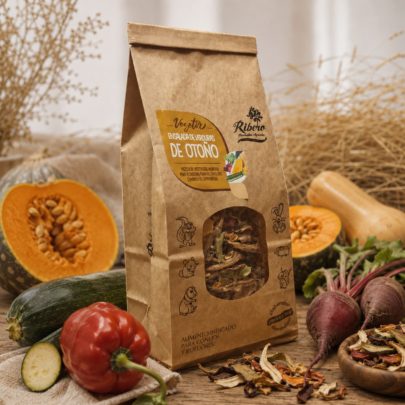
What does the Autumn Vegetable Salad provide for rabbits, guinea pigs, chinchillas and other rodents?
This mix combines vegetables with different nutritional profiles, providing greater variety than a single ingredient.
Together, they provide:
- Plant fibre: naturally provided by the different vegetables in the mix.
- Vitamins and minerals: including vitamins A, C and B-group vitamins, together with potassium, phosphorus, calcium, iron, magnesium and zinc.
- Natural antioxidant compounds: naturally present in vegetables such as pumpkin, beetroot and artichoke.
- Variety of textures and flavours: combining different dehydrated vegetables can make feeding more varied and enriching.
What does the Autumn Vegetable Salad contain?
The mix contains:
- Zucchini: provides fibre, vitamins and minerals and adds a different, mild vegetable texture.
- Celery: an aromatic vegetable providing fibre and various micronutrients.
- Pumpkin: contains carotenoids, vitamins and minerals and adds a naturally mild, slightly sweet flavour.
- Beetroot: provides fibre, plant pigments, vitamins and minerals.
- Artichoke: provides fibre, B-group vitamins and various minerals.
GARDEN Vegetable Salad
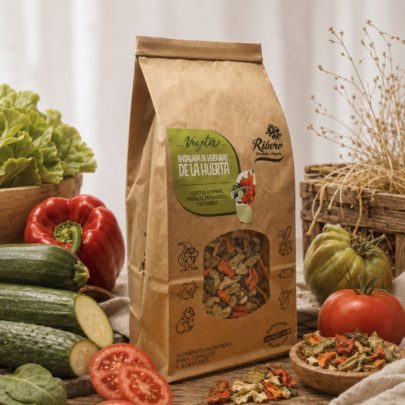
What does the Garden Vegetable Salad provide for rabbits, guinea pigs, chinchillas and other rodents?
This mix combines vegetables with different nutritional profiles, providing a broad variety of fibre, vitamins, minerals and plant compounds.
Together, they naturally provide nutrients such as:
- vitamins A, C, E, B6 and B9
- minerals including potassium, phosphorus, calcium, iron, magnesium and zinc
- plant fibre
- carotenoids
- natural antioxidant compounds
- different aromas, flavours and textures
The main purpose of this mix is to complement the diet and add variety, not to replace a complete and balanced diet.
What does the Garden Vegetable Salad contain?
The mix contains:
- Carrot: provides carotenoids, fibre, vitamins and minerals. Its naturally sweet flavour means it should be offered in moderation.
- Tomato: provides vitamins, fibre and lycopene. When referring to tomato for small mammals, we mean the ripe edible fruit, not the leaves or stems of the tomato plant.
- Red pepper: naturally provides vitamin C, carotenoids and other plant compounds.
- Green pepper: provides vitamin C, vitamin B6, vitamin E and various micronutrients.
- Cucumber: contributes fibre, minerals and a different texture to the mix.
- Zucchini: provides fibre, vitamins and minerals and a mild vegetable flavour.
How to offer VEGETIX vegetables
Offer a small amount of VEGETIX vegetables as a complement to the usual diet, adapting the variety and quantity to the requirements of each species.
They can be offered:
- on their own as a complementary food;
- mixed among hay;
- combined with suitable leaves, herbs or flowers;
- inside a foraging tray;
- on a foraging or snuffle mat;
- inside enrichment toys or food dispensers;
- scattered around the enclosure to encourage natural food-searching behaviour.
For herbivorous species, good-quality hay should always be available without restriction, together with clean, fresh water.
Store the product in a cool, dry place and close the packaging properly after each use.
Important notice
VEGETIX products are complementary foods.
They do not replace fresh vegetables, good-quality hay available without restriction, a complete and balanced diet or veterinary care.
Introduce any new food gradually and adapt the quantity and frequency to the species and individual characteristics of each animal.
For animals with health conditions, pregnant or nursing females, or animals receiving treatment, consult your veterinarian before making dietary changes.
 English
  Spanish