Natural PELLETS for Rabbits and Rodents Made with STEAM
At Ribero, we believe that the quality of a pellet begins long before it takes shape. It all starts with the careful selection of raw materials.
Our steam-made pellets are produced from carefully selected hay, plants, flowers, herbs and vegetables, which are then chopped and pressed to create small 4 mm pellets.
This format makes it easy to offer a variety of plant-based ingredients in a practical, consistent way as part of the complementary diet of rabbits, guinea pigs, chinchillas, hamsters and other small rodents.
A different way to introduce new aromas, flavours and textures, while always keeping high-quality hay as a fundamental part of the diet of small herbivores.
Turning a plant, flower or vegetable into a pellet does not improve its quality by itself. Quality has to be present from the very beginning.
That is why our philosophy is simple: select well first, so we can produce well afterwards.
What are Ribero pellets?
How do we make our steam-made pellets?
The steam process allows us to compact the plant-based ingredients and obtain a pellet with a uniform texture that is easy to handle.
At Ribero, we aim to preserve as much as possible of the natural characteristics of the original ingredient: its aroma, colour and flavour.
We achieve this through:
- Selected ingredients: Plants, flowers, vegetables and forage carefully chosen for each variety.
- Made with steam: A simple process that creates a compact and practical format.
- Natural aroma and flavour: Each pellet retains the organoleptic characteristics of its main ingredient.
- More variety in the diet: Pellets make it easy to introduce new textures, aromas and flavours as part of complementary feeding.
Natural pellets for discovering new flavours
One of the most interesting features of our range is its variety.
“Not all pellets taste or smell the same.”
A rose pellet offers a completely different floral aroma from an artichoke pellet, while varieties such as beetroot, carrot or red pepper introduce more intense vegetable aromas.
This diversity makes it possible to offer different feeding experiences and discover which ingredients spark the greatest interest and curiosity in each animal.
That is why Ribero already uses some of these pellets in its enrichment activities and Buffets, combining them with hay, leaves, flowers, herbs and vegetables.
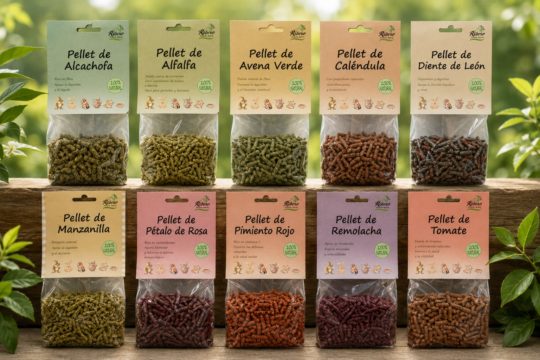
Our range of steam-made pellets
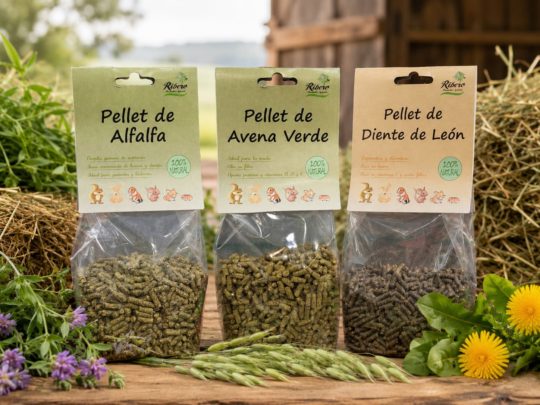
Alfalfa Pellet: A different way to offer alfalfa, particularly suitable for JUNIOR rabbits.
Green Oat Pellet: Made from green oats and designed to complement the diet with a different texture. Ribero also uses it in some of its feeding proposals for moulting periods.
Dandelion Pellet: A well-known plant in the complementary feeding of rabbits and small rodents, presented in a convenient compact format.
Flower Pellets
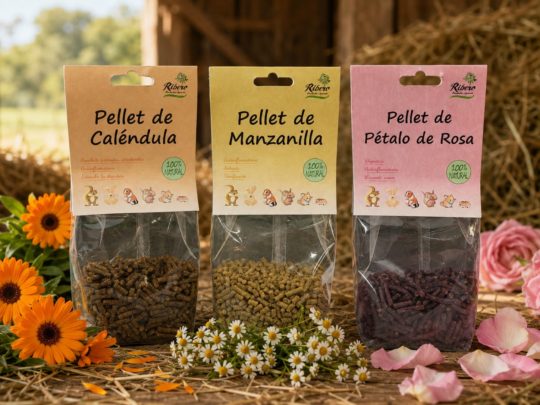
Calendula, Rose and Chamomile Pellets.
Three floral varieties that bring completely different aromas to the feeding bowl compared with hay and vegetables.
They can be offered individually or combined with hay, leaves and other flowers to create foraging and food enrichment activities.
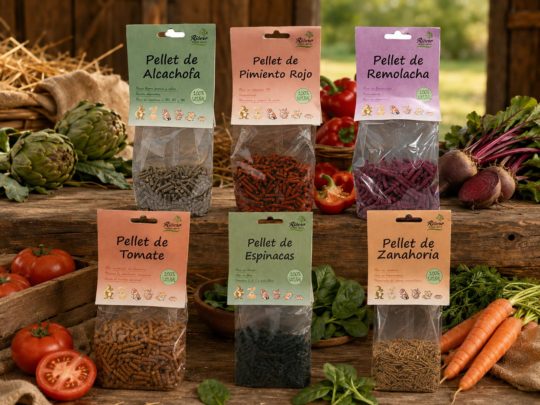
Artichoke, Red Pepper, Tomato, Spinach, Beetroot and Carrot Pellets.
Each vegetable brings its own aroma, colour and flavour, making this range a simple way to add more variety to the complementary diet.
Aromatic Plant Pellets
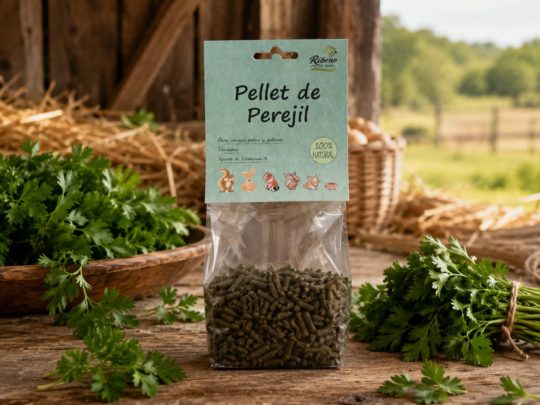
Parsley Pellet.
Its intense aroma also makes it ideal for use as an ingredient in foraging trays or different enrichment activities.
Pellets as Food Enrichment
Feeding does not have to be limited to simply placing food in a bowl.
Rabbits and many small rodents naturally spend time sniffing, exploring and searching for food.
The small size and concentrated aroma of the pellets make them ideal for creating simple enrichment activities.
You can try:
- hiding a few pellets among the hay;
- scattering them around different areas of their enclosure;
- placing them in a snuffle mat;
- putting them inside toys or forage dispensers;
- mixing them with leaves, flowers and herbs;
- using them as small rewards during an activity.
In this way, feeding time can also become an opportunity for exploration, scent-based activity and foraging.
How to offer pellets to rabbits and rodents?
Ribero pellets should be used as a complementary food within a diet adapted to the needs of each species.
They can be offered:
- As a small treat: Give a small amount directly as a reward.
- Mixed with hay: This can increase interest in feeding and encourage natural foraging behaviour.
- In foraging trays: Combined with leaves, flowers, plants and other natural ingredients.
- In enrichment activities: Hidden in toys, tunnels, snuffle mats or placed in different areas of their enclosure.
When introducing a new food, we recommend doing so gradually and in small amounts, while always observing the individual animal’s tolerance.
Important
Ribero pellets are complementary foods and should be offered in amounts appropriate for each animal’s species, age, size and individual needs.
They do not replace high-quality hay available at all times, a complete and balanced diet, or veterinary care from a veterinarian experienced in exotic animals.
For animals with health conditions, pregnant or nursing females, or animals receiving any treatment, consult your veterinarian before introducing them.
If you notice loss of appetite, digestive problems, changes in droppings, pain, lethargy or any significant change in behaviour, seek advice from a veterinarian experienced in exotic animals.
 English
  Spanish