
Flavoured Hay for Rabbits and Rodents
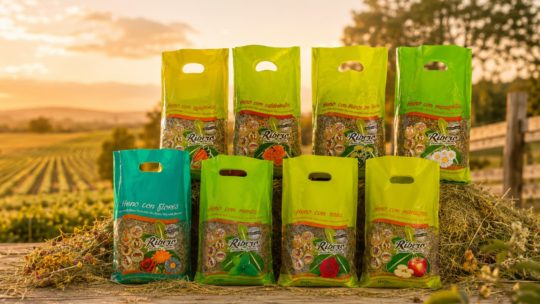
Flavoured hay for rabbits and rodents combines Ribero fescue hay with carefully selected flowers, herbs, fruits or vegetables to add new aromas, flavours and textures to their daily diet.
Fescue hay remains the base of every variety. Its naturally high fibre content supports normal intestinal function, contributes to natural dental wear and encourages prolonged chewing. The added ingredients help enrich the feeding experience and maintain the animal’s interest in eating hay.
At Ribero, we grow, harvest, sun-dry, select and package our own forage. We control the entire process to guarantee full traceability and preserve the natural aroma, texture and flavour of each product as much as possible.
Why choose Ribero flavoured hay?
Our flavoured hay is made from fescue hay grown and naturally sun-dried by Ribero, combined with carefully selected natural ingredients.
Each variety offers a different feeding experience:
- Flowers, such as calendula, rose, chamomile or dandelion;
- Fruits, such as apple;
- Vegetables, such as carrot;
- Aromatic herbs, such as mint.
This variety of aromas and textures can help improve hay acceptance and enrich the daily diet of rabbits, guinea pigs, chinchillas and other small rodents.
FLAVOURED HAY
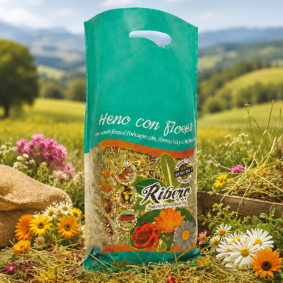
Flower Hay
Ribero flower hay is a complementary food made with a carefully selected blend of natural ingredients: 60% fescue hay, 10% sainfoin, 10% calendula, 10% rose petals and 10% chamomile.
It is the most gourmet variety in Ribero’s flavoured hay range, created to provide a more aromatic, varied and special feeding experience for rabbits, guinea pigs, chinchillas, mice, hamsters, squirrels and other small rodents.
Thanks to its naturally high fibre content, it can be offered daily and in unlimited quantities as a main part of their complementary diet.
The combination of fescue hay, flowers and sainfoin adds new aromas, flavours and textures, helping to maintain the animal’s interest in regular hay consumption.
Main characteristics of flower hay
- It is an essential complement to a balanced diet.
- It supports natural and continuous dental wear through chewing.
- Its high insoluble fibre content helps support normal intestinal function.
- It contributes to healthy digestion and regular intestinal transit.
- It provides natural compounds with antioxidant properties.
- It helps support the body’s natural defences.
- It encourages prolonged chewing and natural feeding behaviour.
- Sainfoin provides natural tannins which, when combined with proteins, help make the hay easier to tolerate at a digestive level.
- Chamomile is traditionally valued for its antispasmodic and calming properties.
- Calendula, rose and chamomile create a highly aromatic floral profile that complements digestive well-being.
- It is the most gourmet and aromatic blend in Ribero’s flavoured hay range.
Ribero flower hay combines the fibre-rich base of fescue hay with a carefully selected blend of flowers and sainfoin to create an especially appealing variety.
Sainfoin provides natural tannins found within its cells, which are highly valued in animal nutrition for their good digestive tolerance.
Chamomile is known for its antispasmodic and mildly calming properties, while calendula and rose are traditionally appreciated for their aroma and their association with digestive well-being.
Thanks to this combination, flower hay offers a more complete, aromatic and varied feeding experience, ideal for rabbits, guinea pigs, chinchillas and other small animals that enjoy discovering new flavours and textures.
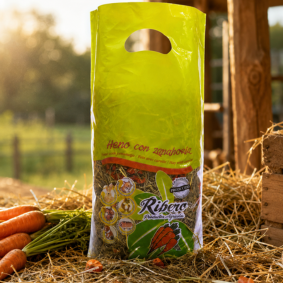
Carrot Hay
Ribero carrot hay is a complementary food made with fescue hay (Festuca arundinacea) and carefully selected premium-quality carrots.
It is especially suitable for rabbits, guinea pigs, chinchillas, hamsters, mice, squirrels and other small rodents. Thanks to its naturally high fibre content, it can be offered every day in unlimited quantities as a key part of their complementary diet.
The combination of fescue hay and carrot provides a different aroma, flavour and texture, helping to keep pets interested in eating hay regularly.
Main characteristics of carrot hay
- It is an essential part of a balanced diet.
- It supports natural and continuous dental wear through chewing.
- Its high insoluble fibre content helps support normal intestinal function.
- It contributes to healthy digestion and regular intestinal transit.
- It provides natural compounds with antioxidant properties.
- It helps support the body’s natural defences.
- It encourages prolonged chewing and natural feeding behaviour.
- Carrot provides carotenoids and vitamins A, C and K.
- It adds variety of aromas, flavours and textures to your pet’s daily hay.
Carrot rich in carotenoids and vitamins
Carrot is known for its natural carotenoid content, which provides precursors to vitamin A, as well as vitamins C and K.
These nutrients contribute to the body’s normal functioning and provide natural compounds with antioxidant properties. Its aroma and flavour also help improve the palatability of the hay and create a more varied feeding experience.
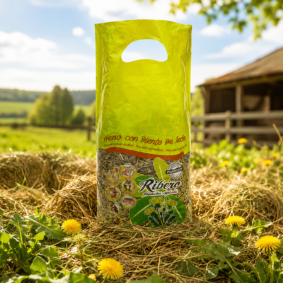
Dandelion Hay
Ribero dandelion hay is a complementary food made with fescue hay (Festuca arundinacea) and carefully selected premium-quality dandelion.
It is especially suitable for rabbits, guinea pigs, chinchillas, mice, hamsters, squirrels and other small rodents. Thanks to its naturally high fibre content, it can be offered every day in unlimited quantities as a key part of their complementary diet.
The combination of fescue hay and dandelion provides new aromas, flavours and textures, helping to maintain your pet’s interest in eating hay regularly.
Main characteristics of dandelion hay
- It is an essential part of a balanced diet.
- It supports natural and continuous dental wear through chewing.
- Its high insoluble fibre content helps support normal intestinal function.
- It contributes to healthy digestion and regular intestinal transit.
- It provides natural compounds with antioxidant properties.
- It helps support the body’s natural defences.
- It encourages prolonged chewing and natural feeding behaviour.
- Dandelion provides iron, vitamin C and folic acid.
- Its nutrients contribute to maintaining a soft, shiny coat.
- It helps add variety to your pet’s daily hay.
Dandelion is rich in iron, vitamin C and folic acid
Dandelion is a plant known for its natural content of iron, vitamin C and folic acid.
These nutrients contribute to the normal functioning of the body and help support healthy bones, coat condition and the body’s natural defences. Its distinctive aroma and flavour also improve the palatability of the hay and enrich your pet’s feeding experience.
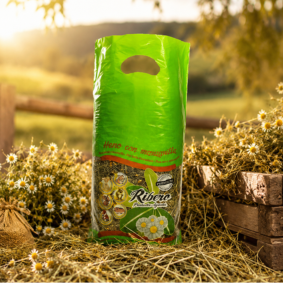
Chamomile Hay
Ribero chamomile hay is a complementary food made with high-quality fescue hay (Festuca arundinacea) and carefully selected chamomile.
It is suitable for rabbits, guinea pigs, chinchillas, mice, hamsters, squirrels and other small rodents. Thanks to its naturally high fibre content, it can be offered daily and in unlimited quantities as a main part of their complementary diet.
The combination of fescue hay and chamomile provides a mild, distinctive aroma, together with new textures and flavours that help maintain the animal’s interest in eating hay every day.
Main characteristics of chamomile hay
- It is an essential complement to a balanced diet.
- It supports natural and continuous dental wear through chewing.
- Its high insoluble fibre content helps support normal intestinal function.
- It contributes to healthy digestion and regular intestinal transit.
- It provides natural compounds with antioxidant properties.
- It helps support the body’s natural defences.
- It encourages prolonged chewing and natural feeding behaviour.
- Chamomile provides a mild, pleasant aroma that helps improve the palatability of the hay.
- It adds variety of aromas, flavours and textures to the daily diet.
Chamomile is an aromatic herb traditionally valued for its natural compounds and its mild, pleasant aroma.
It is associated with calming, digestive, carminative and antispasmodic properties. It also contains compounds with antioxidant activity and can help create a more relaxing and varied feeding experience.
Its distinctive aroma helps improve hay acceptance, especially in animals that need to regain or maintain their interest in regular hay consumption.
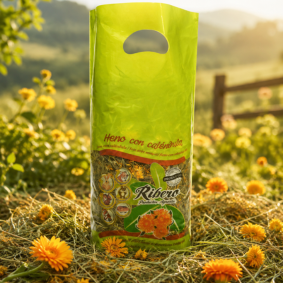
Calendula Hay
Ribero calendula hay is a complementary food made with high-quality fescue hay (Festuca arundinacea) and carefully selected calendula.
It is suitable for rabbits, guinea pigs, chinchillas, mice, hamsters, squirrels and other small rodents. Thanks to its naturally high fibre content, it can be offered daily and in unlimited quantities as a main part of their complementary diet.
The combination of fescue hay and calendula provides a mild floral aroma, new flavours and different textures that help maintain the animal’s interest in eating hay every day.
Main characteristics of calendula hay
- It is an essential complement to a balanced diet.
- It supports natural and continuous dental wear through chewing.
- Its high insoluble fibre content helps support normal intestinal function.
- It contributes to healthy digestion and regular intestinal transit.
- It provides natural compounds with antioxidant properties.
- It helps support the body’s natural defences.
- It encourages prolonged chewing and natural feeding behaviour.
- Calendula is traditionally valued for its digestive properties.
- It adds variety of aromas, flavours and textures to daily hay.
Calendula: an aromatic flower traditionally valued for supporting digestion and intestinal balance
Calendula is a flower known for its natural compounds and its traditional use in supporting digestion.
Its distinctive aroma and flavour help improve the palatability of hay, while its natural components may contribute to digestive well-being and help maintain intestinal balance.
Traditionally, calendula has also been used for properties associated with digestive care and the control of certain intestinal parasites. However, if a parasitic infection is suspected, a veterinarian specialising in exotic animals should always be consulted.
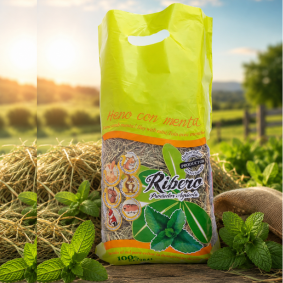
Mint Hay
Ribero mint hay is a complementary food made with high-quality fescue hay (Festuca arundinacea) and carefully selected mint.
It is suitable for rabbits, guinea pigs, chinchillas, mice, hamsters, squirrels and other small rodents. Thanks to its naturally high fibre content, it can be offered daily and in unlimited quantities as a main part of their complementary diet.
The combination of fescue hay and mint provides a fresh, distinctive aroma that helps maintain the animal’s interest in regular hay consumption.
Main characteristics of mint hay
- It is an essential complement to a balanced diet.
- It supports natural and continuous dental wear through chewing.
- Its high insoluble fibre content helps support normal intestinal function.
- It contributes to healthy digestion and regular intestinal transit.
- It encourages prolonged chewing and natural feeding behaviour.
- Mint is known for its digestive and carminative properties.
- It may help support the release of excess intestinal gas.
- Its fresh aroma helps improve the palatability of the hay.
- It adds variety of aromas, flavours and textures to the daily diet.
Mint: fresh aroma and digestive properties
Mint is an aromatic herb traditionally valued for its digestive, carminative and decongestant properties.
Its natural compounds may help support the release of excess intestinal gas and contribute to normal digestion. In addition, its fresh, distinctive aroma helps improve hay acceptance and adds variety to the daily diet.
Mint does not replace veterinary diagnosis or treatment. In cases of persistent gas, loss of appetite, abdominal pain or changes in droppings, a veterinarian specialising in exotic animals should always be consulted.
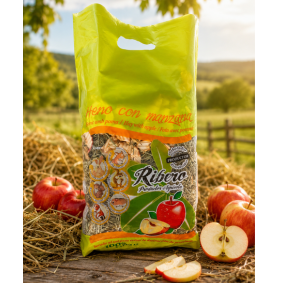
Apple Hay
Ribero apple hay is a complementary food made with high-quality fescue hay (Festuca arundinacea) and carefully selected apple.
It is suitable for rabbits, guinea pigs, chinchillas, mice, hamsters, squirrels and other small rodents. Thanks to its naturally high fibre content, it can be offered daily and in unlimited quantities as a main part of their complementary diet.
The combination of fescue hay and apple provides a sweet, pleasant aroma, together with new flavours and textures that help maintain the animal’s interest in eating hay every day.
Main characteristics of apple hay
- It is an essential complement to a balanced diet.
- It supports natural and continuous dental wear through chewing.
- Its high insoluble fibre content helps support normal intestinal function.
- It contributes to healthy digestion and regular intestinal transit.
- It provides natural compounds with antioxidant properties.
- Apple provides pectin, a type of soluble fibre.
- It contains vitamin C and smaller amounts of vitamin E, potassium and phosphorus.
- It may contribute to a balanced intestinal flora.
- It helps reduce digestive fermentation.
- Its texture encourages chewing and contributes to natural dental care.
- It adds variety of aromas, flavours and textures to daily hay.
Apple: pectin, vitamins and natural aroma
Apple is a fruit rich in pectin, a soluble fibre that is not directly absorbed in the intestine and may contribute to a balanced intestinal flora.
It also provides vitamin C and smaller amounts of vitamin E, potassium and phosphorus. Its natural compounds help enrich the diet and provide a sweet aroma that improves the palatability of the hay.
In addition, the combination of its fibre and texture helps encourage chewing, support intestinal transit and contribute to natural dental care.
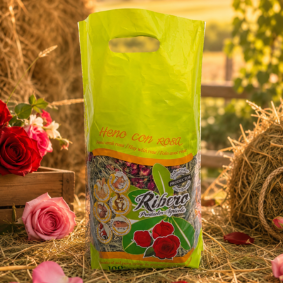
Rose Hay
Ribero Rose Hay is a complementary food made with high-quality fescue hay (Festuca arundinacea) and carefully selected rose petals.
It is suitable for rabbits, guinea pigs, chinchillas, mice, hamsters, squirrels and other small rodents. Thanks to its naturally high fibre content, it can be offered daily and in unlimited quantities as a main part of their complementary diet.
The combination of fescue hay and rose petals provides an intense floral aroma, together with new flavours and textures that help maintain the animal’s interest in eating hay every day.
Main characteristics of rose hay
- It is an essential complement to a balanced diet.
- It supports natural and continuous dental wear through chewing.
- Its high insoluble fibre content helps support normal intestinal function.
- It contributes to healthy digestion and regular intestinal transit.
- It provides natural compounds with antioxidant properties.
- It helps support the body’s natural defences.
- It encourages prolonged chewing and natural feeding behaviour.
- Rose petals are traditionally valued for their digestive properties.
- They provide a highly appealing floral aroma that improves the palatability of the hay.
- They add variety of aromas, flavours and textures to the daily diet.
Rose: floral aroma and digestive properties
Rose petals stand out for their floral aroma and natural compounds.
They are traditionally associated with digestive, anti-inflammatory and mildly laxative properties. For this reason, they can help add variety to daily hay and support the animal’s digestive well-being.
Their distinctive aroma and flavour also help improve hay acceptance and enrich the feeding experience.
 English
  Spanish