Guinea Pig Buffet: hay, vitamin C, plants and natural enrichment
Discover a different way to complement your guinea pig’s diet with the aromas, flavours and textures of the countryside.
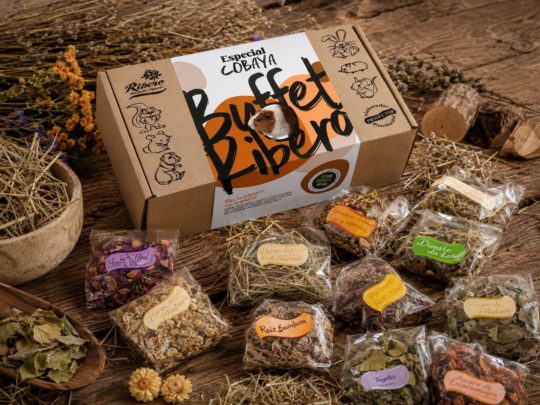
The Ribero Guinea Pig Buffet is a natural-tasting assortment that combines fescue hay, plants, flowers, leaves, dehydrated vegetables, steam-made pellets and natural chew items.
Inside, you will find 13 different products designed to add variety to your guinea pig’s complementary diet, stimulate curiosity and encourage natural behaviours such as sniffing, foraging, exploring and chewing.
Guinea pig nutrition: hay, vitamin C and plant variety
A guinea pig’s diet should be based on good-quality hay available at all times, together with constant access to clean, fresh water.
Hay provides fibre and requires prolonged chewing, making it an essential part of a guinea pig’s daily diet.
Guinea pigs also have a very important nutritional requirement: they cannot synthesise vitamin C themselves, so they need to obtain it every day through an appropriate diet.
Once this foundation is established, complementary foods such as plants, leaves, flowers, dehydrated vegetables and small natural treats can be introduced in suitable amounts.
The Ribero Guinea Pig Buffet brings a variety of options together in one box, making it easier to discover which aromas, flavours and textures spark your guinea pig’s curiosity the most.
What does the Ribero Guinea Pig Buffet contain?
1. Fescue hay and hay tunnel: Ribero fescue hay provides fibre, aroma and a texture that encourages prolonged chewing. The hay tunnel also turns feeding time into an activity of exploration and foraging, helping to provide environmental enrichment.
Hay should always remain freely available.
2. Green Nature Guinea Pig: A 100% natural blend made with 81% different hays, 5% plants and flowers, 12% vegetables and fruits, and 2% cereals. Green Nature Guinea Pig adds a broad range of ingredients, aromas, flavours and textures to the complementary diet.
3. COAD Rich in Vitamin C: Guinea pigs cannot synthesise vitamin C, so they must obtain it through their diet. COAD Rich in Vitamin C combines selected plants, fruits and vegetables to complement their diet and provide a varied selection of ingredients naturally associated with this nutrient.
It should be used as a complementary food and does not replace an appropriate intake of fresh foods or a balanced diet.
4. Flower salad: A blend of natural flowers that adds colour, aroma and variety. You can scatter a small amount through the hay to stimulate your guinea pig’s sense of smell, spark curiosity and encourage natural foraging behaviour.
5. Burdock root: Its firm texture provides a natural option for chewing, exploring and keeping your guinea pig occupied. It can be offered in small amounts as part of a balanced diet based mainly on hay.
6. Apple twig: A natural item designed for chewing and exploration. Its texture encourages chewing and contributes to the natural wear of the teeth, which grow continuously in guinea pigs.
7. Mountain leaves: An aromatic blend of olive, ash, basil, birch and rosemary leaves that brings different plant aromas and textures to the feeding area. They can be mixed with hay to add variety and encourage exploration.
8. Garden vegetable salad: A selection of dehydrated vegetables that concentrates different flavours, aromas and textures into small portions. It can be used as a complementary food or small treat, always introduced gradually and in the recommended amounts.
It does not replace the daily portion of fresh vegetables suitable for guinea pigs.
9. Dandelion: A nutritionally interesting plant that provides fibre, aroma and plant variety. It can be mixed with regular hay and offered as part of the complementary diet.
10. Chamomile pellets: Made using steam from chamomile, they retain their characteristic aroma and provide a different texture. They can be used as a small treat, mixed with hay or included in enrichment activities.
11. Red pepper pellets: Red pepper is naturally rich in vitamin C, an especially important nutrient in guinea pig nutrition. These steam-made pellets can be offered in small amounts as a treat or complementary food within a balanced diet.
12. Passionflower: An aromatic plant that adds sensory variety to the feeding area. It should be offered occasionally and in small amounts as a complementary food. You can also sprinkle a little through the hay to stimulate smell and foraging.
13. Carob: Carob has an intense aroma and a naturally sweet taste. It should be offered occasionally and in small amounts, as a treat within a balanced diet.
Vitamin C in a guinea pig’s diet
Vitamin C is an essential nutrient for guinea pigs because their bodies cannot produce it themselves.
Their daily diet therefore needs to include suitable foods that help meet their vitamin C requirements.
Fresh vegetables suitable for guinea pigs should form part of their normal diet, while products such as those included in the Buffet can be used as complementary foods to add variety, new aromas and different textures.
Food enrichment for guinea pigs
Feeding does not have to mean simply placing food in a bowl.
Guinea pigs also enjoy exploring, sniffing and searching for food.
With the products included in the Buffet, you can:
- hide small amounts among the hay;
- prepare a foraging tray;
- scatter leaves and flowers around different areas;
- use pellets as small rewards;
- offer roots and twigs for chewing.
This helps turn feeding time into an activity of exploration, stimulation, natural foraging and environmental enrichment.
From the field straight to the feeder
At Ribero, we are agricultural producers and work to control the traceability of the raw materials used in our products.
Our farming experience allows us to know the origin of the forage we use and carefully select the plants, flowers, leaves and other ingredients that form part of our products.
From growing through to packing, we work to preserve their natural aromas, textures and characteristics.
From the field straight to the feeder.
Vitamin C, variety and enrichment in one box
The Ribero Guinea Pig Buffet allows you to discover a range of complementary foods without having to buy each product separately.
Its combination of hay, plants, flowers, leaves, vegetables, pellets and natural chew items provides:
- different aromas, flavours and textures;
- plant-based options associated with vitamin C intake;
- stimulation of smell and curiosity;
- opportunities to forage and explore;
- natural products to chew;
- greater variety within the complementary diet.
How to offer the Guinea Pig Buffet?
Always introduce new foods gradually and in small amounts.
Keep good-quality hay and clean, fresh water available at all times.
Make sure your guinea pig receives an appropriate daily intake of vitamin C, mainly through suitable fresh foods as part of a balanced diet.
Use the Buffet products as complementary foods and follow the recommended quantity and frequency for each one.
Store the contents in a cool, dry place away from direct light.
Important
The products included in the Ribero Guinea Pig Buffet are complementary feeds. They do not replace hay available at all times, a complete and balanced diet, an adequate intake of vitamin C or appropriate veterinary care.
For guinea pigs with medical conditions, pregnant or nursing animals, or animals receiving any treatment, consult your veterinarian beforehand.
If you notice loss of appetite, changes in droppings, pain, lethargy, digestive or urinary problems, or any significant behaviour change, consult a veterinarian experienced in exotic pets.
 English
  Spanish