
FRUITIX RANGE: Dried Fruits for Rabbits and Rodents
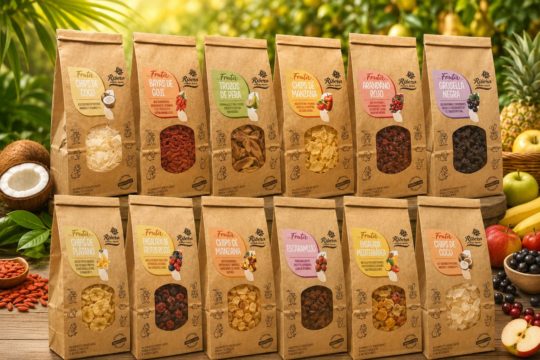
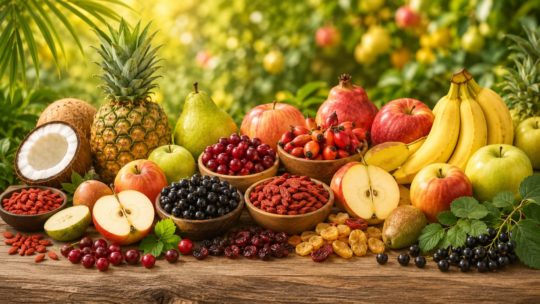
Discover FRUITIX by Ribero, our range of dried fruits for rabbits and other small rodents, carefully selected to bring new aromas, flavours and textures to their diet.
Apple, banana, rosehip, red berries and different fruit blends make up a range designed to offer small natural treats on an occasional basis.
Because fruit naturally contains sugars, FRUITIX products should always be offered in small amounts and in moderation, either as an occasional treat or as part of food enrichment and foraging activities.
You can hide small pieces among the hay, scatter them in a foraging tray or use them as a reward to encourage exploration and natural food-seeking behaviour.
Because even a small treat can become an opportunity to smell, search, explore and enjoy.
Why offer dried fruit to rabbits and rodents?
Fruit can add a variety of aromas, flavours and textures to the diet of rabbits and small rodents when offered occasionally and in amounts suited to each species.
The dehydration process helps preserve many of the fruit’s sensory characteristics while creating small pieces that are easy to use as an occasional treat, reward or as part of food enrichment activities.
The FRUITIX range by Ribero makes it easy to introduce different fruits practically and appealingly, creating new experiences at feeding time.
However, fruit naturally contains sugars, so it should always be offered in moderation and should never replace the essential foods in the animal’s diet.
For rabbits, guinea pigs and chinchillas, high-quality hay should form the basis of the diet and be available at all times, together with fresh, clean water.
FRUITIX: Natural Treats for Discovering New Flavours
The FRUITIX range by Ribero brings together a selection of carefully chosen and dried fruits to be offered as small occasional treats for rabbits and other small rodents.
Each variety provides a different aroma, flavour and texture, helping to introduce new sensory experiences into a diet adapted to the needs of each species.
You can use FRUITIX to:
- Offer a small occasional treat.
- Introduce new aromas, flavours and textures.
- Create natural food-searching activities.
- Add small rewards to foraging trays.
- Use individual pieces as a reward during interaction with your pet.
- Combine small amounts with hay, leaves, flowers or plants suitable for each species.
The key is the amount: a small piece can be enough to add variety and turn feeding time into a different and enriching experience.
Discover FRUITIX Fruits by Ribero
Rosehip
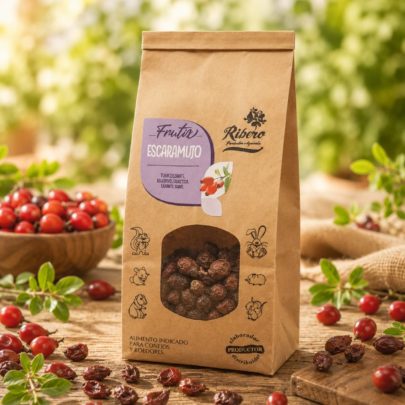
Rosehip is a particularly aromatic dried fruit that adds a variety of flavours, aromas and textures to the complementary diet of rabbits, guinea pigs, chinchillas and other rodents, birds and reptiles.
Properties and Benefits:
- Naturally high in vitamin C: rosehip is especially valued for its naturally high vitamin C content and also provides other nutrients naturally present in the fruit.
- Naturally soothing properties: traditionally associated with a calming effect and can add variety to enrichment routines.
- Digestive support: its natural fibre content can contribute to normal digestive function.
- Rich in nutrients: provides naturally occurring vitamins and minerals, with no additives or preservatives.
Its small size and intense aroma make it easy to use as an occasional treat or as part of food enrichment activities. You can hide a few pieces among the hay, add them to a foraging tray, or combine them with leaves, flowers and plants suitable for each species.
As rosehip is a dried fruit, it should always be offered in small amounts and in moderation, adapting the quantity and frequency to the needs of each animal.
Banana Chips
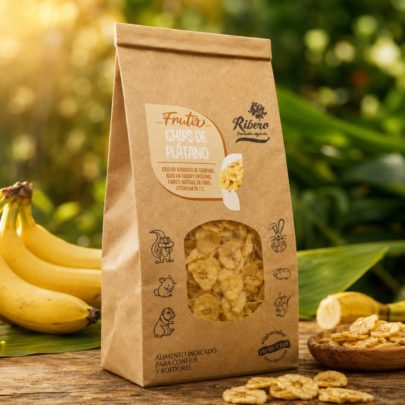
Banana chips have a naturally sweet flavour and a crunchy texture, making them an especially appealing occasional treat for rabbits, guinea pigs, chinchillas, other rodents, reptiles and birds, while also providing a range of naturally occurring nutrients.
Properties and Benefits:
- Rich in carbohydrates and naturally low in fat and protein.
- Potassium: contributes to normal muscle and nerve function.
- Calcium and magnesium: help support the maintenance of bones and teeth.
- Fibre: contributes to healthy digestive function. Banana also naturally provides a variety of vitamins, minerals and trace elements.
Thanks to their chip format, they are easy to break into small pieces and use as an occasional reward or as part of foraging and food enrichment activities.
Try hiding a small piece among the hay, placing it in a foraging tray, or keeping it as a reward during interaction with your pet.
Because of their naturally occurring sugar content, banana chips should be offered only in small amounts and on an occasional basis. They should never be used as a substitute for hay or for a complete and balanced diet.
Apple Chips
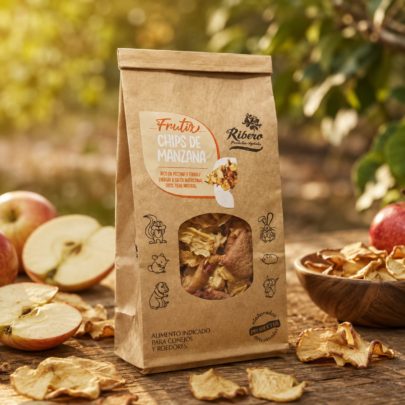
Apple chips are a simple way to add the aroma, flavour and texture of apple as a small occasional treat for rabbits, guinea pigs, chinchillas, other rodents, reptiles and birds.
Properties and Benefits:
- Rich in pectin: a type of soluble fibre that can help support normal digestive function and a healthy intestinal environment.
- Interesting texture for chewing: their crunchy texture adds variety to feeding and encourages natural chewing behaviour.
- Source of vitamins and minerals: apples naturally provides vitamin C, along with small amounts of vitamin E, potassium and phosphorus.
Their texture and aroma add sensory variety and allow apple chips to be used in different ways: directly as a reward, hidden among the hay, or incorporated into foraging and food enrichment activities.
You can break each chip into smaller pieces and scatter them in different areas to encourage your pet to search for the reward.
As apple chips are dried fruit, they should be offered in moderation and in small amounts due to their naturally concentrated sugar content.
Goji Berries
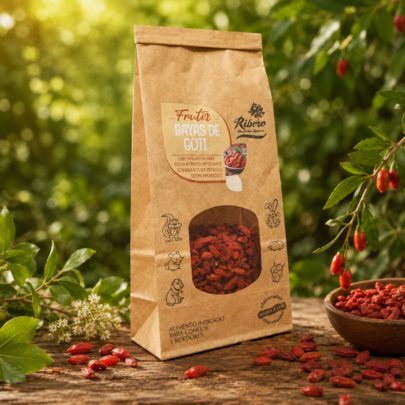
Goji berries are small dried fruits with an intense colour, aroma and flavour, offering a different sensory experience as an occasional treat for rabbits, guinea pigs, chinchillas, other rodents, reptiles and birds.
Properties and Benefits:
- Vitamin A: contributes to normal vision and supports the immune system.
- Antioxidants: help protect cells against oxidative stress.
- Vitamin C: contributes to normal immune system function.
- Amino acids and trace elements: provide naturally occurring nutrients involved in different physiological functions.
- Phytosterols: naturally occurring plant compounds found in goji berries.
Their small size makes goji berries easy to use directly as a reward or to incorporate into foraging and food enrichment activities, hiding them among hay, leaves and flowers or scattering them in different areas of your pet’s environment.
As with other dried fruits, goji berries should be offered only in small amounts and on an occasional basis due to their naturally concentrated sugar content.
Pear Pieces
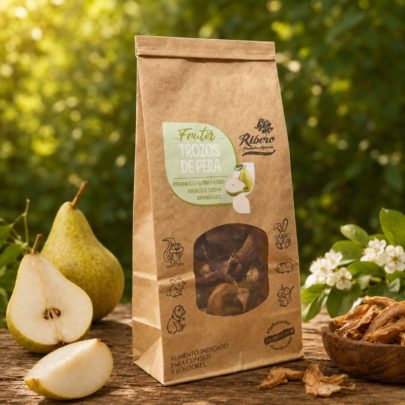
Dried pear pieces are free from added sugars and artificial preservatives and are selected to be offered as a small occasional treat for rabbits, guinea pigs, chinchillas, other rodents, reptiles and birds.
Properties and Benefits:
- Naturally low in calories and a source of fibre: fibre can help support normal digestive function and add variety to the diet.
- Vitamins A, C and E: these vitamins contribute to different physiological functions and provide naturally occurring antioxidant compounds.
- Naturally occurring antioxidants: help protect cells against oxidative stress.
- Source of fibre: contributes to normal digestive function and can help provide a feeling of fullness.
- Vitamins and minerals: pear naturally provides vitamins A, C, E and B-group vitamins, together with minerals such as potassium.
- Potassium: an essential mineral involved in several normal body functions.
- A naturally sweet fruit: because dried pear contains naturally concentrated sugars, it should always be offered in small amounts and on an occasional basis.
Its naturally sweet flavour and characteristic aroma add variety to occasional treats for rabbits and other rodents, while also making dried pear suitable for food enrichment activities.
You can cut the pear pieces into smaller portions and hide them among the hay, place them in foraging trays, or scatter them around your pet’s environment to encourage natural food-searching behaviour.
Due to its naturally occurring sugar content, dried pear should always be offered in moderation and in small amounts.
Blackcurrant
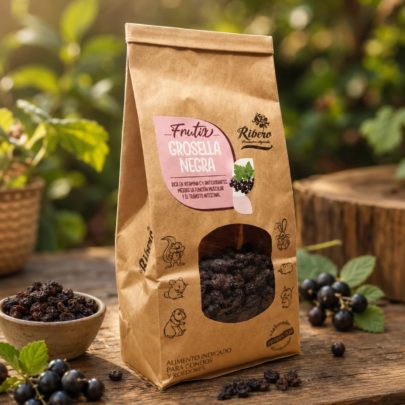
Blackcurrant is a small fruit with an intense aroma and flavour that can be offered as an occasional treat to provide new sensory experiences for rabbits, guinea pigs, chinchillas, other rodents, reptiles and birds.
Properties and Benefits:
- Rich in vitamin C and other nutrients: contributes to normal immune system function.
- Naturally low in calories.
- Contains vitamin A: contributes to normal vision and skin health.
- Source of fibre: helps support normal intestinal transit and healthy digestive function.
- Contains anthocyanins: plant pigments responsible for its characteristic dark colour and known for their antioxidant activity.
Their small size makes blackcurrants easy to use as a reward or to hide among hay, leaves and flowers to create foraging and food enrichment activities.
Because of their naturally occurring sugar content, blackcurrants should always be offered in small amounts and only occasionally, adapting the quantity to each species and individual animal.
Coconut Chips
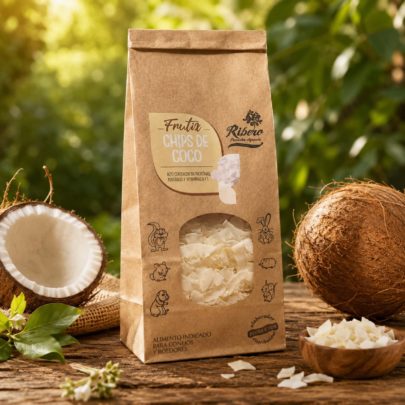
Coconut chips add a tropical aroma and a different texture to the range of natural occasional treats for rabbits, guinea pigs, chinchillas, other rodents, reptiles and birds.
Properties and Benefits:
Coconut has a different nutritional profile from the other fruits in the FRUITIX range, as it naturally contains a significant proportion of fat, together with protein, minerals, trace elements, B-group vitamins and vitamin E.
Because of this particular composition, coconut chips should be considered a particularly occasional treat, offered in small pieces and always adjusting the amount to the species and individual characteristics of each animal.
Their texture makes coconut chips easy to use as a reward or to include in small pieces as part of foraging and food enrichment activities.
You can hide them among the hay or combine them with leaves, flowers and other natural products suitable for each species to create a different experience of exploration and foraging.
Because of their naturally occurring sugar content, coconut chips should always be offered in small amounts and only occasionally, adapting the quantity to each species and individual animal.
Cranberries
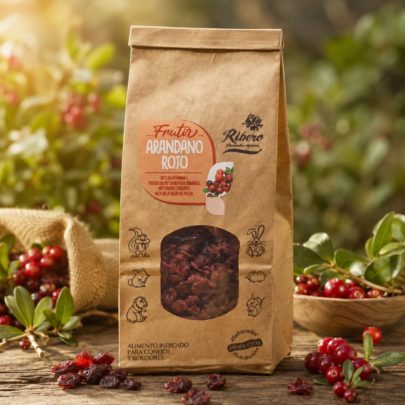
Cranberries have an intense, distinctive flavour that adds variety to the range of occasional treats for rabbits, guinea pigs, chinchillas, other rodents, birds and reptiles.
Properties and Benefits:
- Rich in vitamin C and antioxidant polyphenols: provide naturally occurring compounds that help protect cells against oxidative stress.
- Natural antioxidants: contribute to protecting cells from oxidative damage.
- Vitamin C: contributes to normal immune system function.
- B-group vitamins: support different metabolic processes and contribute to overall wellbeing.
Thanks to their small size, cranberries are especially practical to use as a reward or as part of food enrichment activities. You can scatter a small amount in a foraging tray, hide them among other suitable natural products, or use them to encourage natural food-searching behaviour.
As with other dried fruits, cranberries contain a higher concentration of naturally occurring sugars than fresh fruit, so they should be offered only in small amounts and on an occasional basis.
Red Berry Salad
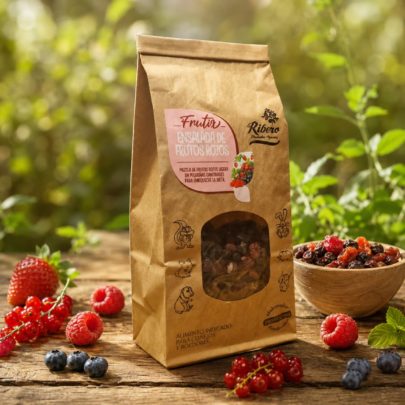
The Red Berry Salad combines different dried fruits and berries to create a colourful blend full of aromas, flavours and textures.
Its composition includes cranberries, strawberries, raspberries, elderberries, hawthorn berries, aronia berries and blackcurrants, providing a wide variety of plant-based ingredients in a single mix.
Properties and Benefits: The different fruits naturally provide vitamins, minerals, fibre and antioxidant plant pigments. However, the main value of this blend as part of complementary feeding is the sensory variety it can offer.
Use small amounts as an occasional treat, or turn the blend into a food enrichment activity by hiding a few pieces among the hay, combining them with suitable leaves and flowers, or scattering them in a foraging tray.
Because of the naturally occurring sugar content of the fruits, this blend should be offered only occasionally and in small amounts.
Mediterranean Fruit Salad
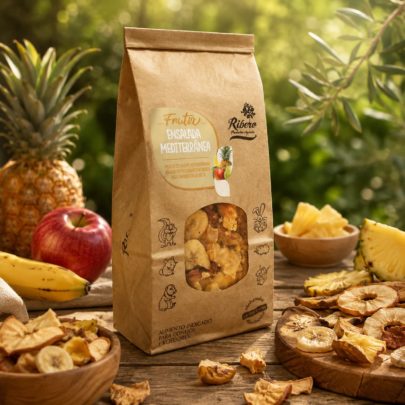
The Mediterranean Fruit Salad combines a variety of dried fruits to create a particularly diverse mix of aromas, flavours and textures.
The blend contains apple, pear, pineapple, banana and mango, each offering different sensory characteristics.
These fruits naturally provide fibre, vitamins and minerals such as potassium, magnesium, calcium and phosphorus, along with other nutrients naturally present in the ingredients.
The variety of sizes, aromas and flavours makes the Mediterranean Fruit Salad a particularly interesting option for creating foraging and food enrichment activities. You can select small pieces and hide them among the hay or scatter them around your pet’s environment to encourage exploration and natural food-searching behaviour.
It should always be offered as an occasional treat and in small amounts, due to the naturally occurring sugar content of dried fruits.
FRUITIX as Food Enrichment
Feeding time can also become an opportunity to explore, search and discover.
Rabbits and many small rodents naturally spend part of their time searching for food and exploring their environment. Using small treats as part of enrichment activities is a simple way to encourage these natural behaviours.
You can hide small amounts of FRUITIX among the hay, scatter a few pieces around your pet’s environment, or add them to a foraging tray together with suitable leaves, flowers and plants for each species.
You can also place them inside toys, food dispensers or other enrichment items designed to encourage food-seeking behaviour.
In this way, a small piece of fruit becomes more than just a treat: it becomes part of an activity that encourages exploration, scenting and natural food-searching behaviour.
How to Offer Dried Fruit to Rabbits and Rodents
FRUITIX products should be offered in small amounts and only occasionally, always adapting the quantity to the animal’s species, size, age and usual diet.
As these are dried fruits, their naturally occurring sugar content is more concentrated than in fresh fruit. For this reason, they should not be offered freely or used as a substitute for hay, fresh vegetables suitable for each species, or a complete and balanced diet.
When introducing a new variety, do so gradually and always observe how well your pet tolerates it.
You can offer FRUITIX:
- Directly as a small occasional treat.
- Mixed in small amounts among the hay.
- In a foraging tray.
- In snuffle mats or enrichment toys.
- Scattered in different areas to encourage food-searching behaviour.
- Combined with leaves, plants or flowers suitable for each species.
Each species has different nutritional needs, so the frequency and amount should always be adapted to the individual animal.
The Importance of Hay in Their Diet
Although FRUITIX can add variety and new experiences at feeding time, hay remains the essential food for rabbits, guinea pigs and chinchillas.
High-quality hay provides mainly fibre and supports a diet suited to the digestive physiology of these animals. Its prolonged chewing also contributes to the natural wear of the teeth and encourages species-appropriate behaviours such as selecting, chewing and searching for food.
For this reason, hay should be available at all times throughout the day, together with fresh, clean water.
FRUITIX products should be understood as an occasional complement within a varied and balanced diet, and never as a substitute for hay.
Important
FRUITIX products are complementary foods and should be offered only occasionally and in small amounts due to the naturally occurring sugar content of fruit.
They do not replace high-quality hay available at all times, a complete and balanced diet, or the care and advice of a veterinarian specialised in exotic animals.
Nutritional requirements can vary considerably between rabbits, guinea pigs, chinchillas, hamsters and other small rodents. Always check that each type of fruit is suitable for the species before offering it.
For animals with health conditions, excess weight, digestive or metabolic disorders, as well as pregnant or lactating animals or those receiving any treatment, consult a specialised veterinarian beforehand.
If your pet shows loss of appetite, changes in droppings, pain, lethargy or any other significant change in normal behaviour, seek advice from a specialised veterinarian.
 English
  Spanish